Gengar Card Values
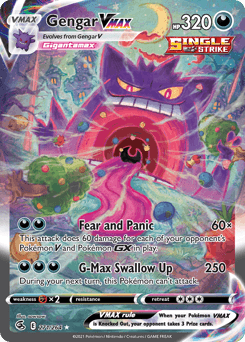
Gengar's ghost-type popularity has earned it VMAX and alt-art treatments across several sets, with the Fusion Strike VMAX in particular becoming a well-known chase card.
- Cards found
- 51
- Most expensive
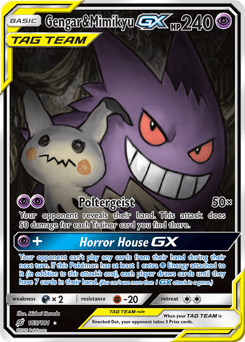
- Gengar & Mimikyu-GX · $2,063.55
- Least expensive
- $0.39
- Sets appeared in
- 33
Highest-priced Gengar cards
Gengar EX prints
Showing 12 of 12 cards
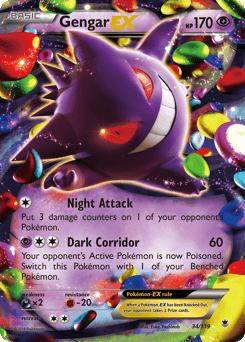
Gengar-EX
#34 · Rare Holo EX
$81.11
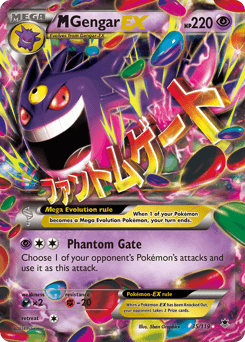
M Gengar-EX
#35 · Rare Holo EX
$155.61
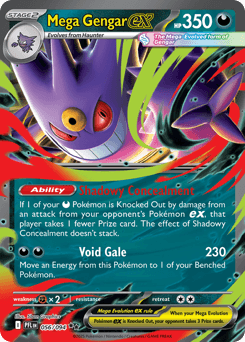
Mega Gengar ex
#56 · Double Rare
$2.45
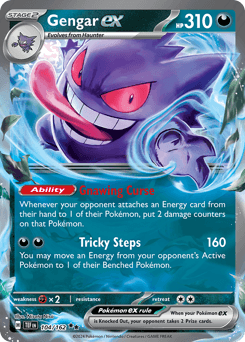
Gengar ex
#104 · Double Rare
$6.44
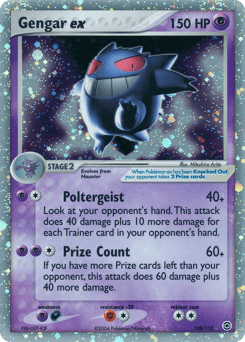
Gengar ex
#108 · Rare Holo EX
$1,399.99
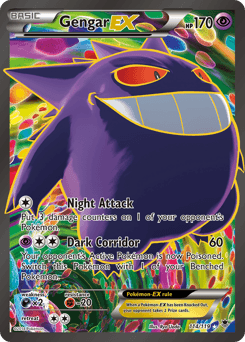
Gengar-EX
#114 · Rare Ultra
$765.03
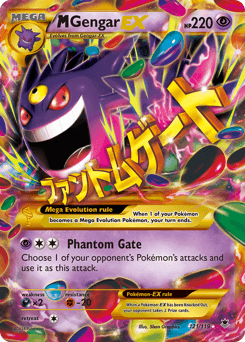
M Gengar-EX
#121 · Rare Secret
$509.05
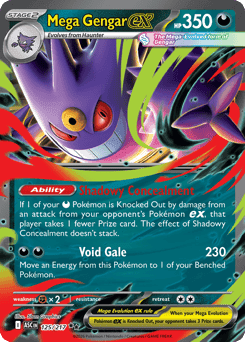
Mega Gengar ex
#125 · Double Rare
$2.56
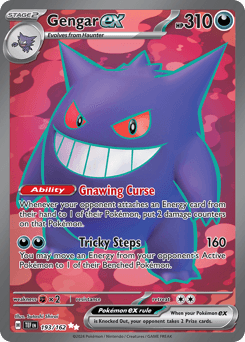
Gengar ex
#193 · Ultra Rare
$52.42
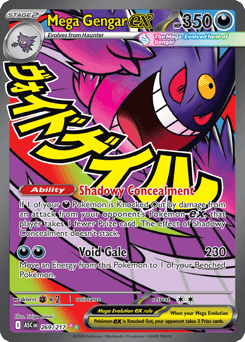
Mega Gengar ex
#269 · MEGA_ATTACK_RARE
$35.52
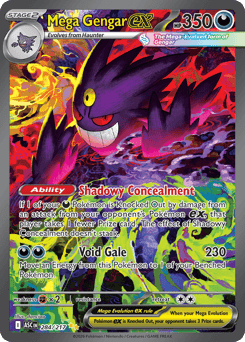
Mega Gengar ex
#284 · Special Illustration Rare
$816.34
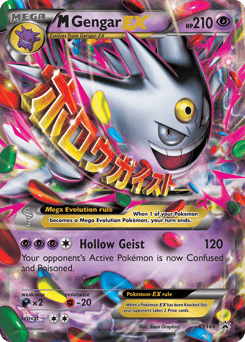
M Gengar-EX
#XY166 · Promo
—
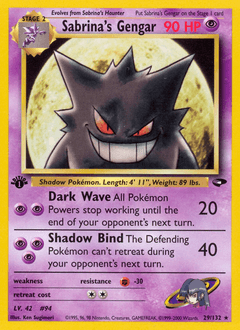
Original Base Set-era Gengar cards
Recent Gengar releases
Showing 16 of 16 cards
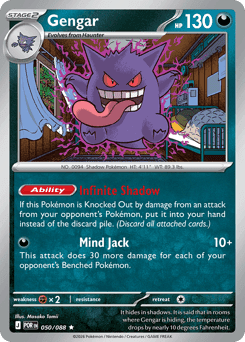
Gengar
#50 · Rare
$0.52
Mega Gengar ex
#56 · Double Rare
$2.45
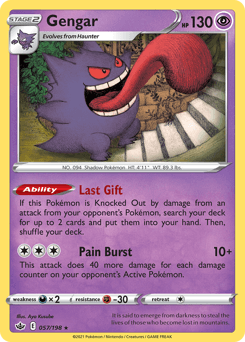
Gengar
#57 · Rare Holo
$3.80
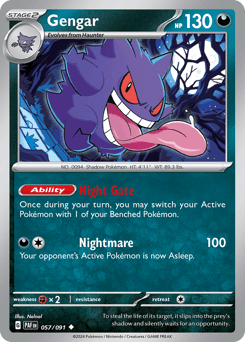
Gengar
#57 · Uncommon
$0.39
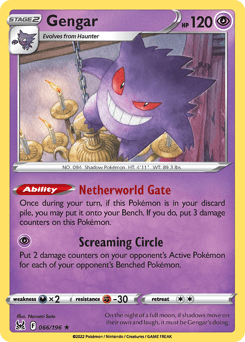
Gengar
#66 · Rare Holo
$4.02
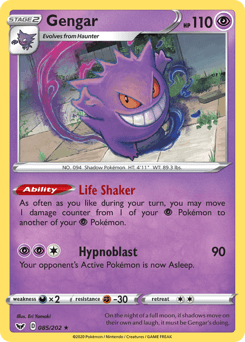
Gengar
#85 · Rare Holo
$7.65
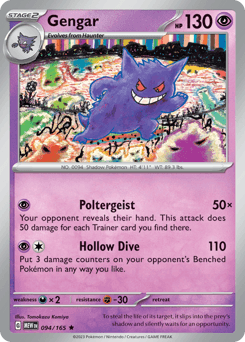
Gengar
#94 · Rare
$2.55
Gengar ex
#104 · Double Rare
$6.44
Mega Gengar ex
#125 · Double Rare
$2.56
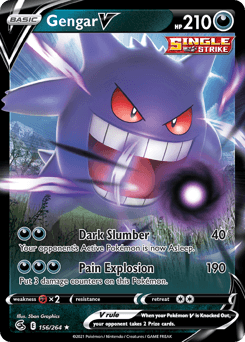
Gengar V
#156 · Rare Holo V
$10.55
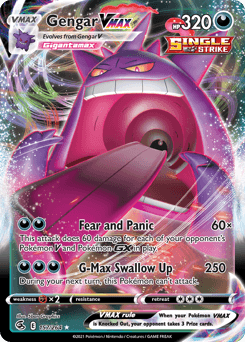
Gengar VMAX
#157 · Rare Holo VMAX
$41.56
Gengar ex
#193 · Ultra Rare
$52.42
Early Gengar printings
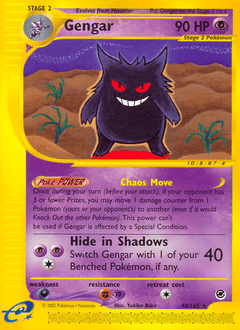
Every Gengar card
Showing 51 of 51 cards
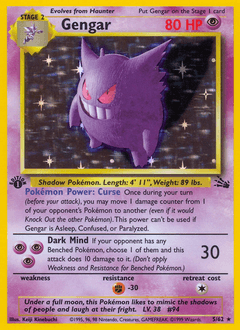
Gengar
#5 · Rare Holo
$663.25
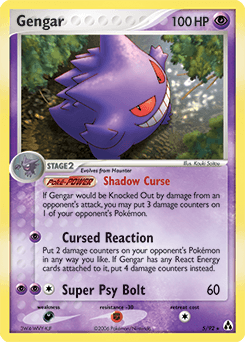
Gengar
#5 · Rare Holo
$181.19
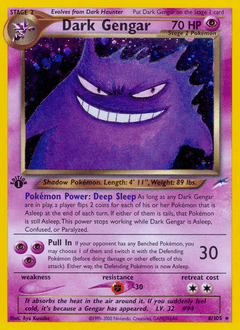
Dark Gengar
#6 · Rare Holo
$749.99
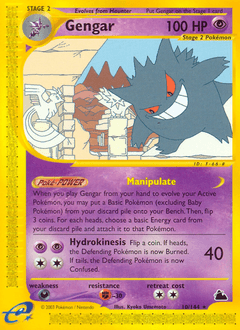
Gengar
#10 · Rare
$509.99
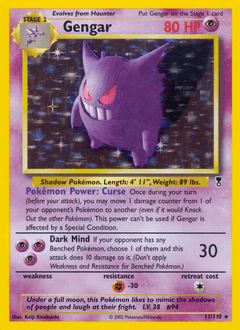
Gengar
#11 · Rare Holo
$289.99
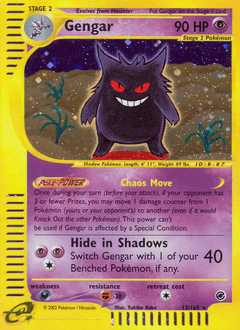
Gengar
#13 · Rare Holo
$716.67
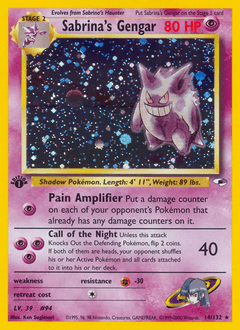
Sabrina's Gengar
#14 · Rare Holo
$549.50
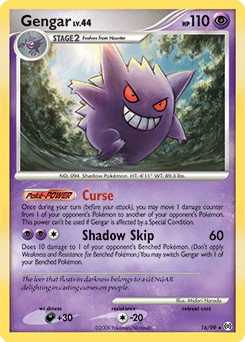
Gengar
#16 · Rare
$44.39
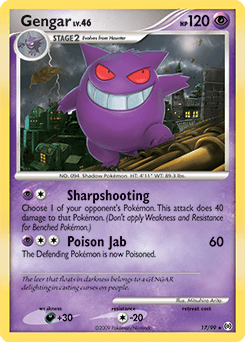
Gengar
#17 · Rare
$96.40
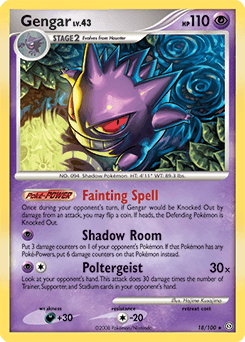
Gengar
#18 · Rare
$65.42
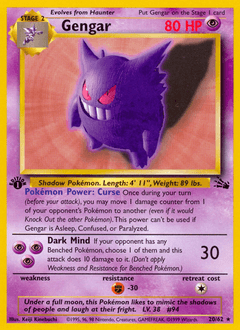
Gengar
#20 · Rare
$116.42
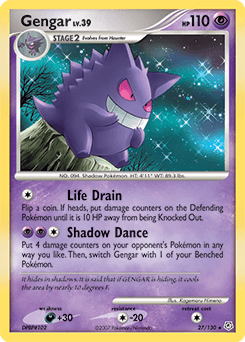
Gengar
#27 · Rare
$93.84
Gengar value guide
Gengar's biggest modern price spikes trace back to a single print: the Fusion Strike VMAX alt art, whose striking illustration and comparatively tight pull rate made it a well-known chase card almost immediately. That print set the tone for how collectors now value Gengar's other alt-art and illustration-rare treatments — demand tracks the specific artwork more than the card's in-game rarity marker. Older Gengar holos from the Fossil and Neo eras are valued the more conventional way: scarcity, print run, and condition, without a particular art-driven spike. Because Gengar's ghost-type appeal keeps demand fairly steady across eras, it's one of the more consistent Pokémon to track — but confirming which specific print and set you're holding still matters more than the printed rarity symbol on the card.
Other Pokémon collectors also track
Where Gengar shows up
- Ascended Heroes3 cards · 2026
- Perfect Order1 card · 2026
- Phantasmal Flames1 card · 2025
- Paldean Fates1 card · 2024
- Temporal Forces2 cards · 2024
- 1511 card · 2023
- Lost Origin1 card · 2022
- Lost Origin Trainer Gallery1 card · 2022
- Chilling Reign1 card · 2021
- Fusion Strike3 cards · 2021
- Sword & Shield1 card · 2020
- SWSH Black Star Promos2 cards · 2019
- Team Up4 cards · 2019
- Unbroken Bonds1 card · 2019
- Crimson Invasion1 card · 2017
- Generations1 card · 2016
- BREAKthrough1 card · 2015
- Phantom Forces5 cards · 2014
- XY Black Star Promos1 card · 2013
- HS—Triumphant1 card · 2010
- Arceus3 cards · 2009
- Rising Rivals1 card · 2009
- Stormfront1 card · 2008
- Diamond & Pearl1 card · 2007
- Legend Maker1 card · 2006
- FireRed & LeafGreen1 card · 2004
- Skyridge2 cards · 2003
- Expedition Base Set2 cards · 2002
- Legendary Collection1 card · 2002
- Neo Destiny1 card · 2002
- Gym Challenge1 card · 2000
- Gym Heroes1 card · 2000
- Fossil2 cards · 1999
Track Gengar’s value over time
Prices on this page update daily from current market activity, not a fixed catalog value — a card that looked flat last month can move quickly once a new set or reprint shifts supply. If you’re watching a specific Gengar card closely, these tools help turn a single price into a fuller picture.
What moves a Gengar card’s price
- Card type & subtype
- A base Gengar print, an ex/EX, a VMAX, or a VSTAR command very different prices even from the same set — subtype almost always matters more than the Pokémon itself.
- Set & release era
- Vintage Gengar cards trade on scarcity built up over 20+ years; modern Gengar cards trade on print run and how limited that specific set's pull rate was.
- Condition
- Whitening, edge wear, and surface scratches all pull an otherwise desirable Gengar card down in price, sometimes by more than the rarity difference between two prints.
- Rarity & print run
- A holo or alt-art Gengar from a small, short-lived print run typically outprices a common reprint of the same card from a mass-produced set.
- Grading
- A professionally graded Gengar — PSA, CGC, or BGS — removes condition guesswork and can carry a meaningfully higher price than the same card raw, especially at the top grades.
Frequently asked questions
Why did the Fusion Strike Gengar VMAX become such a well-known chase card?
A striking alt-art illustration paired with a relatively tight pull rate at the time made it stand out immediately, and it's kept steady collector demand ever since.
Are older Gengar holos from the Fossil or Neo era worth chasing too?
Yes, though for different reasons — those older prints are valued on scarcity, print run, and condition rather than a specific art-driven demand spike like the modern alt arts.
Does a Gengar card's printed rarity marker actually predict its price?
Only loosely. Alt-art and illustration-rare status matter more than the rarity symbol printed on the card itself — two cards with the same marker can price very differently.
Are there listings that mislabel a regular Gengar holo as an alt art to inflate the price?
It happens fairly often — a seller lists a standard-rarity holo Gengar as "alt art" or "rainbow rare" because those terms sell better, when the card is really just a normal print from that set. Cross-check the card's actual rarity against the set list before paying an alt-art premium for something that isn't one.
Collector’s tip
Alt-art Gengar prints can look similar across sets at a glance — confirm the exact set and print before assuming you have the specific chase version.
More Pokémon to check
Scan any Gengar card
Point your phone's camera at a Gengar card and Slab identifies it and pulls its live price instantly — free on iOS.