What's In Your Binder Worth?
Search Slab's live Pokémon card database for today's market price — or scan a card in the app and skip the typing.
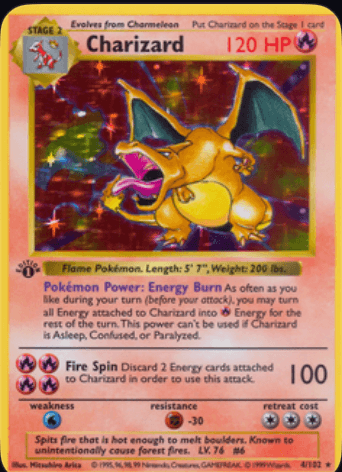
Free · 20,387 cards · 170 sets · updated daily · Get the app
Search the full catalog
Every card we track, priced daily from TCGplayer market data.
By Pokémon
Pokémon price hubs
- Charizard107 cardsSee prices →
- Pikachu173 cardsSee prices →
- Umbreon44 cardsSee prices →
- Eevee81 cardsSee prices →
- Mewtwo86 cardsSee prices →
- Gengar51 cardsSee prices →
- Rayquaza60 cardsSee prices →
- Lugia37 cardsSee prices →
- Blastoise46 cardsSee prices →
- Venusaur48 cardsSee prices →
- Espeon38 cardsSee prices →
- Gyarados58 cardsSee prices →
- Dragonite49 cardsSee prices →
- Alakazam30 cardsSee prices →
- Snorlax56 cardsSee prices →
- Mew49 cardsSee prices →
- Garchomp38 cardsSee prices →
- Tyranitar48 cardsSee prices →
- Sylveon32 cardsSee prices →
Slab, screen by screen
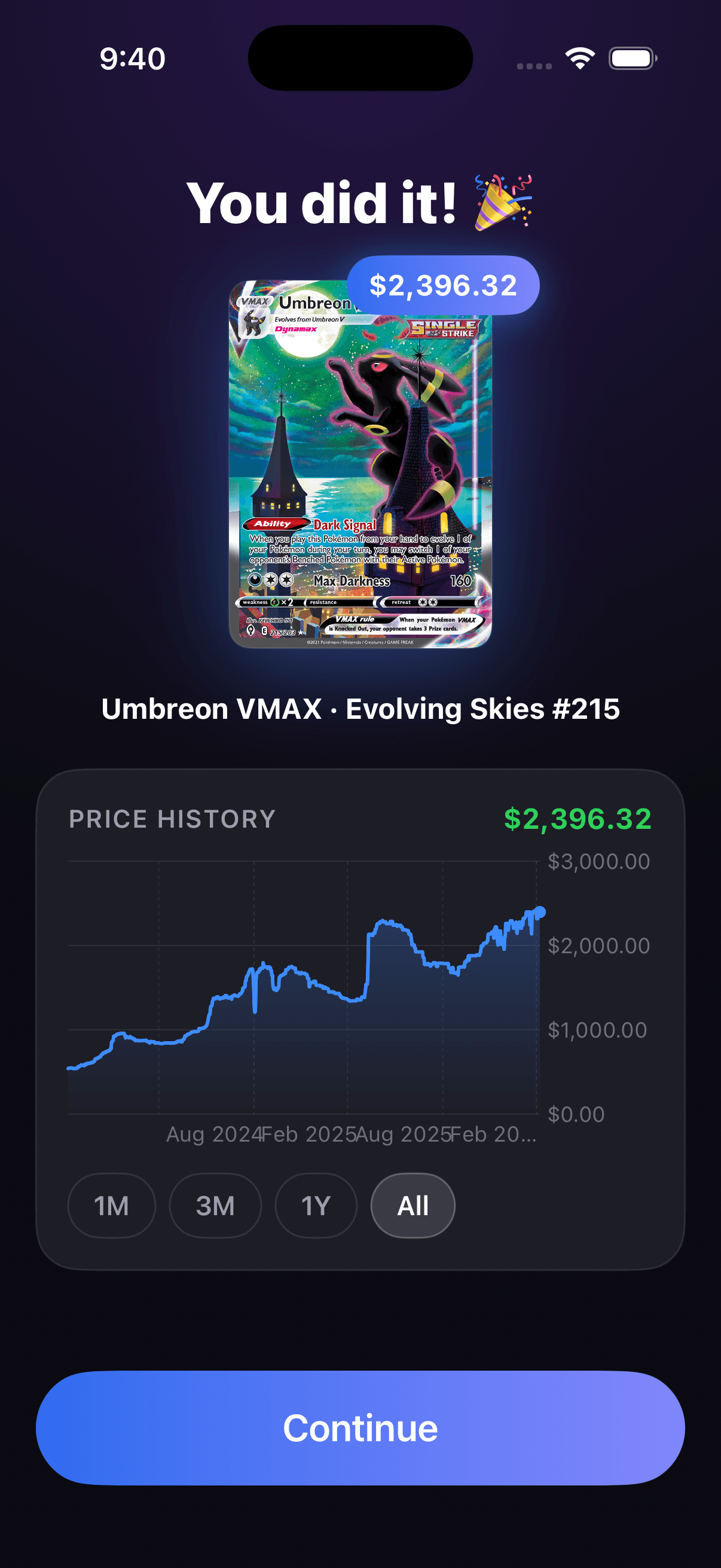
Point and scan
A photo is all it takes — Slab matches the exact printing and shows its price immediately.
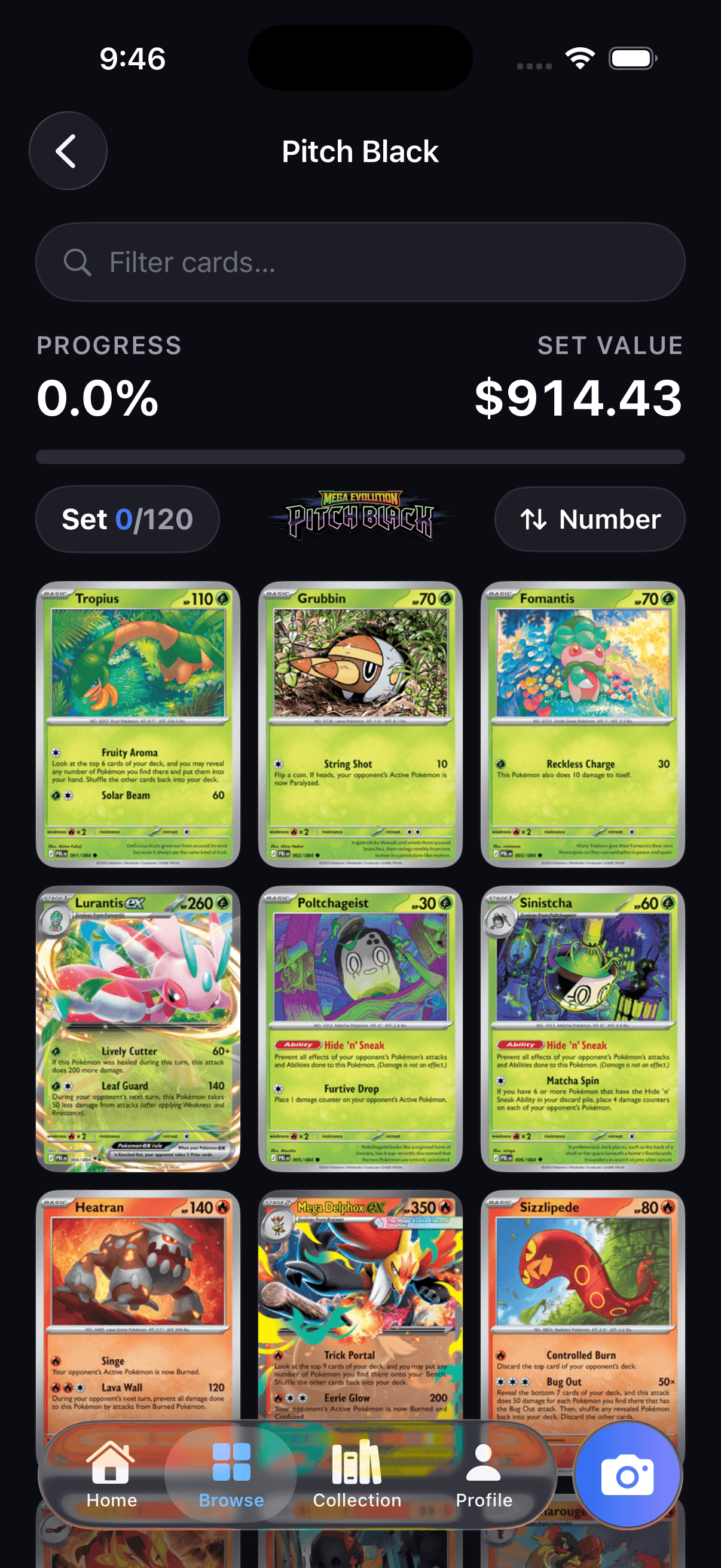
Browse by set
Flip through any set's full lineup, with a price on every card.
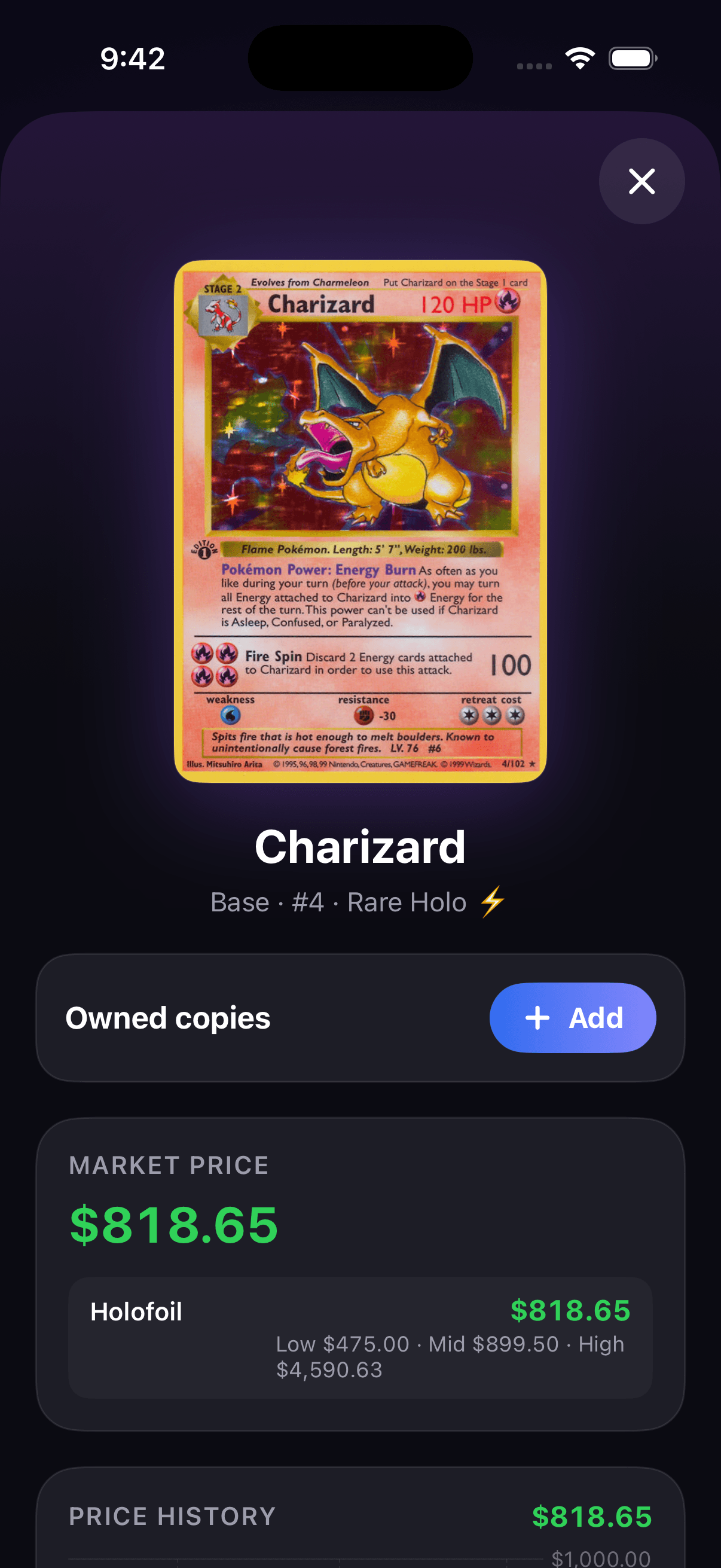
Drill into a card
Every variant, its condition ladder, and where the price has been.
Everything a collector needs
Instant scan
Point your camera at a card — Slab identifies it in a fraction of a second, fully offline.
Live TCGplayer prices
Market prices sync straight from TCGplayer and refresh automatically.
Graded ladders
PSA, CGC, and BGS grade-by-grade values — not just the raw market price.
Collection tracking
Build a binder of every copy you own, by variant, condition, and grade.
5 games
Pokémon, Yu-Gi-Oh!, One Piece, Disney Lorcana, Star Wars Unlimited — one scanner, every card.
Price history
See where a card's been, not just where it is, with a full price chart.
Scan yours to track it
Slab identifies the card from a photo and keeps its price, graded value, and your collection in sync — free on iOS.
From the blog
All posts →Set Guide
Pitch Black Set Guide: What's Actually Worth ChasingPokémon's newest set closes out a year of Mega Evolution releases. Here's what's actually in the box, which pulls anchor the price ladder, how the set is actually structured, and who it's really built for.
August 21, 2026 · 11 min read
Grading Data
PSA vs. CGC vs. BGS: What the Grade Ladders Actually ShowThree grading companies, three separate sets of numbers. Here's how our own graded ladder is actually built, what it can and can't tell you, and what genuinely differs between the three services.
August 21, 2026 · 11 min read
More ways to check a price
- Card value calculatorSearch any Pokémon card for its current market price.
- Most expensive cardsThe highest-priced Pokémon cards we track, ranked daily.
- PSA 10 pricesRaw price next to PSA 10 price for well-known chase cards.
- Card condition guideWhat NM, LP, MP, HP, and DMG mean, and how condition moves price.
- Vintage card valuesPricing across the original English print run, grouped by set and era.
- Is grading worth it?When a grading submission pays for itself, and when it doesn't.
Frequently asked questions
How do I find out what my card is worth on Slab?
Type its name into the search box above, or scan it with the Slab app — either way you land on the card's page with its current market price, every printing we track, and its graded ladder if one exists. No account and no upload queue, just the card and its price.
How are the prices on Slab calculated?
We take TCGplayer's daily market price for the product listing our catalog maps to a card and republish it as-is — no markup, no smoothing, no blended "fair value." See our pricing methodology page for the full breakdown of how listings get matched to cards.
How fresh is the pricing data?
Prices refresh once a day across the whole catalog. The recently-scanned feed on this page and every card's own price-history chart both reflect that same daily cadence — there's no separate faster-updating tier.
Should I trust the raw price or the graded price for my card?
It depends on what's actually in your hand. If your copy has never been submitted to a grading company, the raw price is the honest comparison; if it's already graded, use that grade's rung on the ladder instead. We show both side by side so you don't have to guess which applies.
Does Slab cost anything to use?
No — scanning, price lookups, price history, and collection tracking are all free on iOS. There's no paywall and no account requirement to use any of it.
Which games does Slab support?
Pokémon, Yu-Gi-Oh!, One Piece, Disney Lorcana, Star Wars Unlimited — one scanner across all five. This site's price pages are Pokémon-only today; the app itself covers every game in that list.
How Slab prices cards
Where the numbers come from
Every price on Slab comes from TCGplayer’s public market data for the closest matching product listing — not a guess, not an average of forum chatter, and not adjusted upward to look more impressive. We pull the daily market price for every listing we track, batch it against our card catalog, and republish it here once a day. For the full mechanical breakdown — how a listing gets matched to a card and how often each piece refreshes — see our pricing methodology page.
Reading a price across printings, conditions, and grades
A single card can have more than one price worth knowing. A holo, reverse holo, or special-illustration printing of the same card and number is usually its own listing, sometimes priced far apart from the standard version. Condition moves the raw price further still — a whitened corner or a light crease pulls a near-mint asking price down once you’re actually negotiating a sale. And a graded copy carries its own ladder of values by numeric grade across PSA, CGC, and BGS, which is why we show the graded ladder next to the raw price rather than folding everything into one number.
Using this before you buy, sell, or submit
None of this replaces checking a live listing before an actual transaction — treat the price here as a same-day reference, not a locked-in quote. It’s still useful for deciding whether a card is worth grading, whether a trade is fair, or just whether it’s worth digging a specific card out of a bulk box. Scan a card in the Slab app and you get the same pricing pipeline instantly, matched to the exact printing from a photo.
20,387
cards tracked
170
sets
5
games
19
Pokémon hubs