Charizard Card Values
Charizard has anchored the secondary market since the 1999 Base Set — few Pokémon get a full-art or ex reprint as often, or hold value as consistently, across sets old and new.
- Cards found
- 107
- Most expensive
- Charizard · $2,999.99
- Least expensive
- $0.40
- Sets appeared in
- 50
Highest-priced Charizard cards
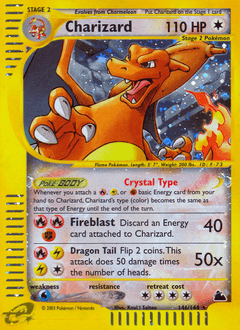
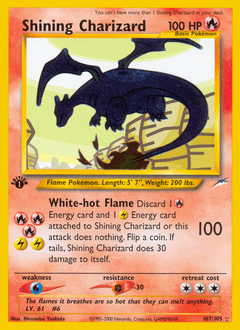
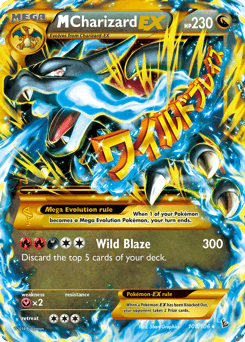
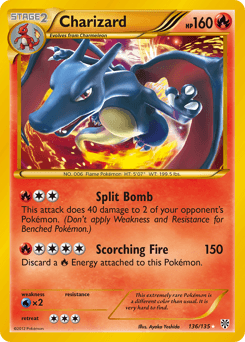
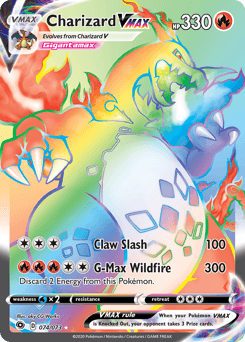
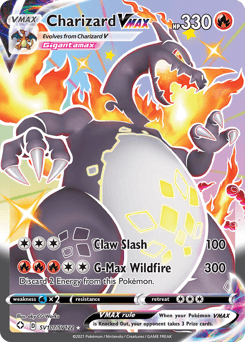
Charizard VMAX prints

Charizard EX prints
Showing 34 of 34 cards
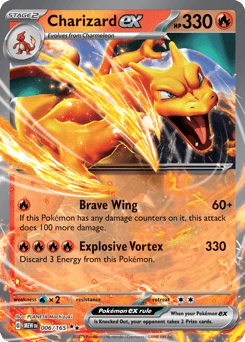
Charizard ex
#6 · Double Rare
$8.28
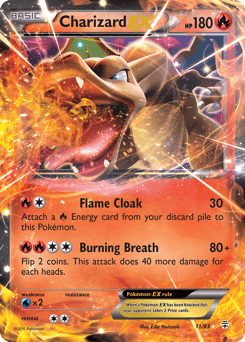
Charizard-EX
#11 · Rare Holo EX
$28.42
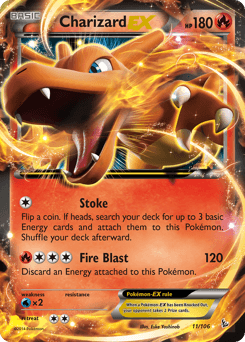
Charizard-EX
#11 · Rare Holo EX
$16.73
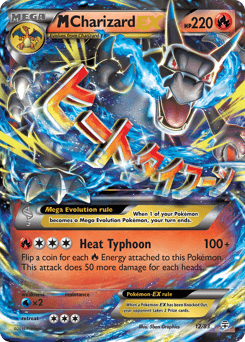
M Charizard-EX
#12 · Rare Holo EX
$162.49
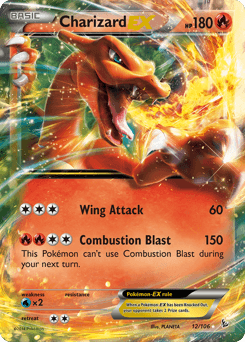
Charizard-EX
#12 · Rare Holo EX
$18.78
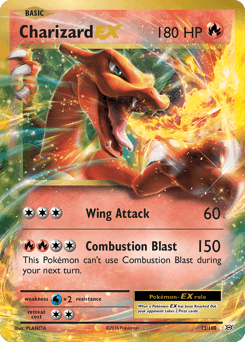
Charizard-EX
#12 · Rare Holo EX
$15.98
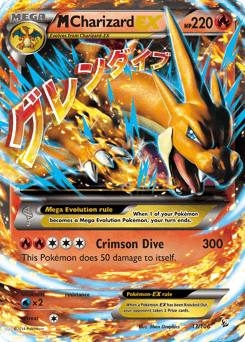
M Charizard-EX
#13 · Rare Holo EX
$68.39
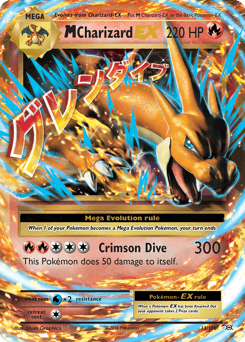
M Charizard-EX
#13 · Rare Holo EX
$39.87
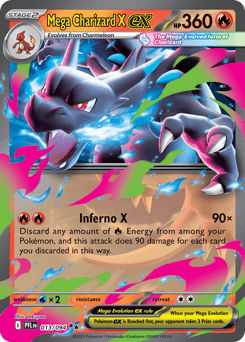
Mega Charizard X ex
#13 · Double Rare
$4.98
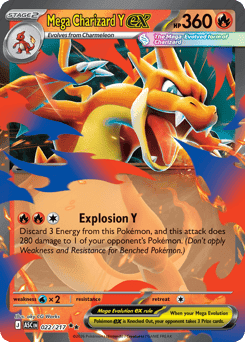
Mega Charizard Y ex
#22 · Double Rare
$5.78
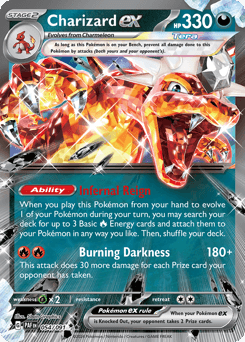
Charizard ex
#54 · Double Rare
$4.95
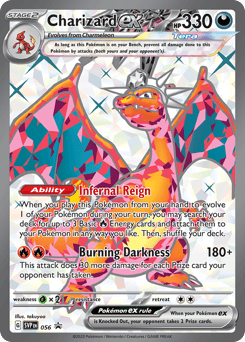
Charizard ex
#56 · Promo
—
Original Base Set-era Charizard cards
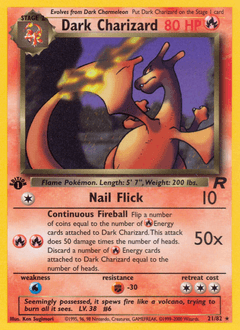
Recent Charizard releases
Showing 36 of 36 cards
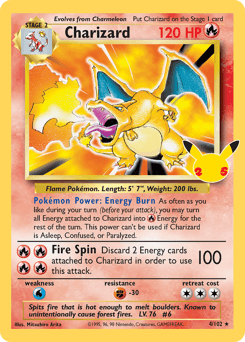
Charizard
#4 · Classic Collection
$155.14
Charizard ex
#6 · Double Rare
$8.28
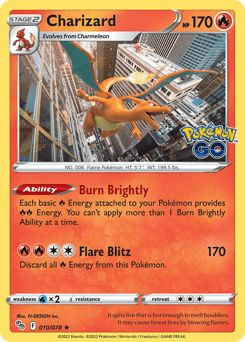
Charizard
#10 · Rare Holo
$3.20
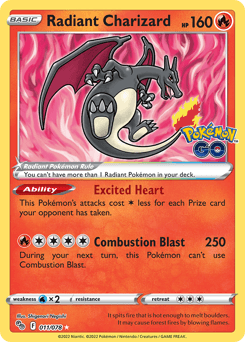
Radiant Charizard
#11 · Radiant Rare
$18.21
Mega Charizard X ex
#13 · Double Rare
$4.98
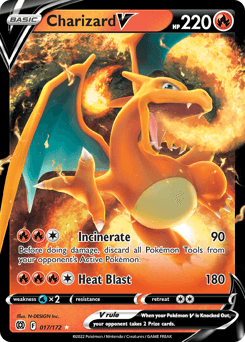
Charizard V
#17 · Rare Holo V
$7.54
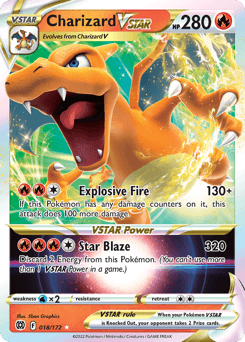
Charizard VSTAR
#18 · Rare Holo VSTAR
$12.06
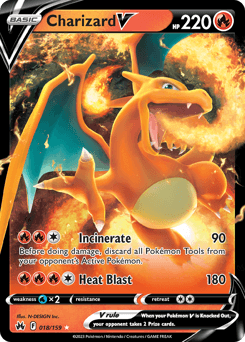
Charizard V
#18 · Rare Holo V
$6.93
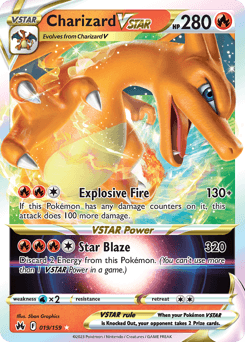
Charizard VSTAR
#19 · Rare Holo VSTAR
$10.96
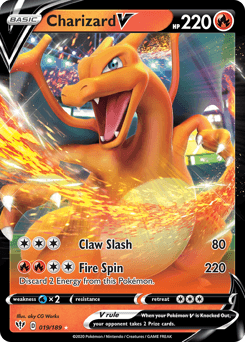
Charizard V
#19 · Rare Holo V
$9.55
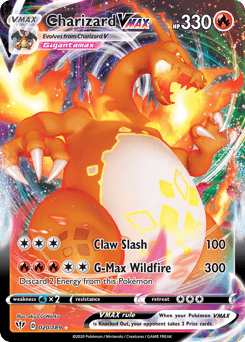
Charizard VMAX
#20 · Rare Holo VMAX
$43.11
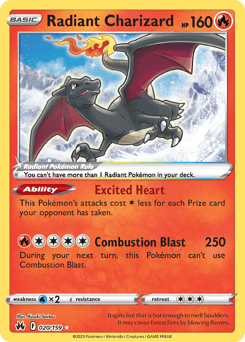
Radiant Charizard
#20 · Radiant Rare
$11.15
Early Charizard printings
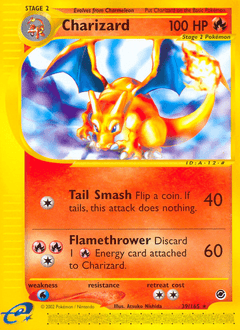
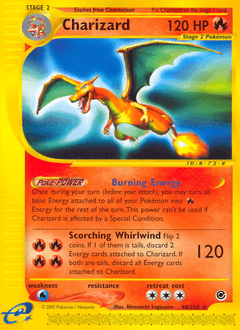
Every Charizard card
Showing 107 of 107 cards
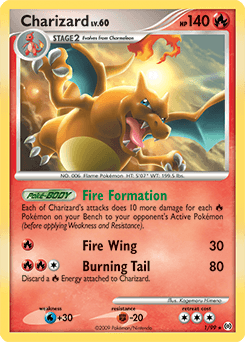
Charizard
#1 · Rare Holo
$110.13
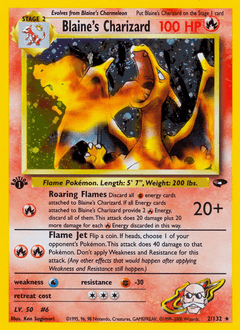
Blaine's Charizard
#2 · Rare Holo
$699.99
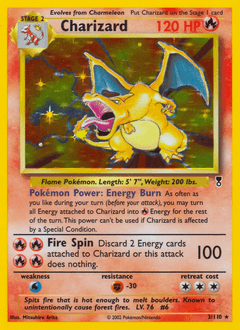
Charizard
#3 · Rare Holo
$899.99
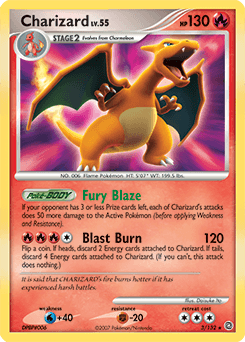
Charizard
#3 · Rare Holo
$137.72
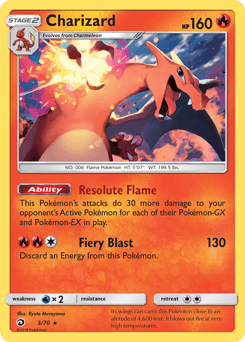
Charizard
#3 · Rare Holo
$14.63
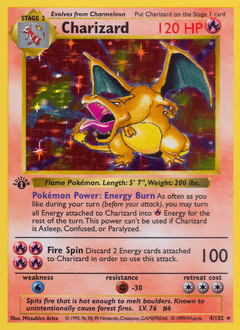
Charizard
#4 · Rare Holo
$944.53
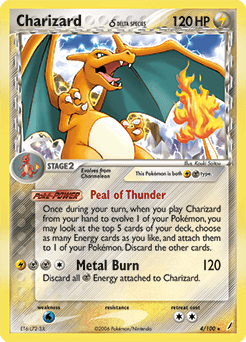
Charizard δ
#4 · Rare Holo
$939.50
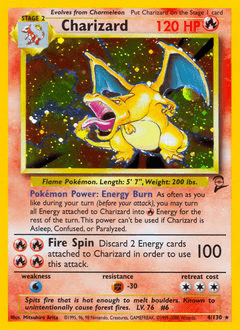
Charizard
#4 · Rare Holo
$488.97
Charizard
#4 · Classic Collection
$155.14
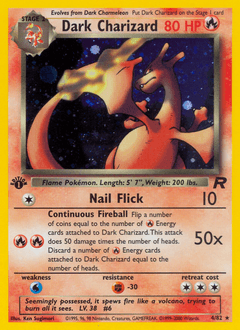
Dark Charizard
#4 · Rare Holo
$121.94
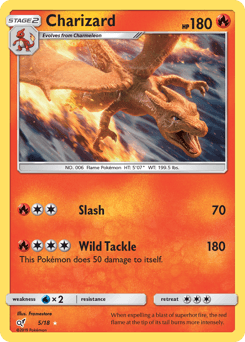
Charizard
#5 · Rare Ultra
$13.95
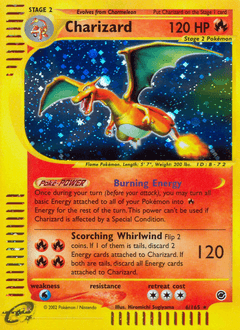
Charizard
#6 · Rare Holo
$287.50
Charizard value guide
Charizard's price ceiling comes from a rare mix: a 1999 Base Set holo that predates modern print-run discipline, a fire-type popularity that's never really cooled, and a habit of getting the flashiest treatment in nearly every modern set — full-art ex, VMAX, VSTAR, you name it. That combination means Charizard trades in two very different markets at once. Vintage copies (Base Set, Jungle-era, first editions especially) are priced almost entirely on scarcity and condition — a single grade jump can multiply the value. Modern Charizard chase cards are priced on pull rate and how striking that specific illustration is, and can swing hard with hype cycles. Neither market moves in lockstep with the other, so a "Charizard card" heading doesn't tell you much on its own — the set, the subtype, and the condition do almost all of the work.
Other Pokémon collectors also track
Where Charizard shows up
- Ascended Heroes2 cards · 2026
- Phantasmal Flames4 cards · 2025
- Paldean Fates2 cards · 2024
- 1513 cards · 2023
- Crown Zenith3 cards · 2023
- Obsidian Flames4 cards · 2023
- Scarlet & Violet Black Star Promos3 cards · 2023
- Brilliant Stars5 cards · 2022
- Lost Origin Trainer Gallery1 card · 2022
- Pokémon GO2 cards · 2022
- Celebrations: Classic Collection1 card · 2021
- Shining Fates Shiny Vault1 card · 2021
- Champion's Path2 cards · 2020
- Darkness Ablaze2 cards · 2020
- Vivid Voltage1 card · 2020
- Cosmic Eclipse3 cards · 2019
- Detective Pikachu1 card · 2019
- Hidden Fates1 card · 2019
- Hidden Fates Shiny Vault1 card · 2019
- SWSH Black Star Promos7 cards · 2019
- Team Up1 card · 2019
- Unbroken Bonds3 cards · 2019
- Dragon Majesty1 card · 2018
- Burning Shadows2 cards · 2017
- SM Black Star Promos8 cards · 2017
- Evolutions5 cards · 2016
- Generations3 cards · 2016
- Flashfire7 cards · 2014
- Legendary Treasures1 card · 2013
- Plasma Storm1 card · 2013
- XY Black Star Promos3 cards · 2013
- Boundaries Crossed1 card · 2012
- Arceus1 card · 2009
- Supreme Victors2 cards · 2009
- Stormfront1 card · 2008
- DP Black Star Promos1 card · 2007
- Power Keepers1 card · 2007
- Secret Wonders1 card · 2007
- Crystal Guardians1 card · 2006
- Dragon Frontiers1 card · 2006
- FireRed & LeafGreen1 card · 2004
- Dragon1 card · 2003
- Skyridge1 card · 2003
- Expedition Base Set3 cards · 2002
- Legendary Collection1 card · 2002
- Neo Destiny1 card · 2002
- Base Set 21 card · 2000
- Gym Challenge1 card · 2000
- Team Rocket2 cards · 2000
- Base1 card · 1999
Track Charizard’s value over time
Prices on this page update daily from current market activity, not a fixed catalog value — a card that looked flat last month can move quickly once a new set or reprint shifts supply. If you’re watching a specific Charizard card closely, these tools help turn a single price into a fuller picture.
What moves a Charizard card’s price
- Card type & subtype
- A base Charizard print, an ex/EX, a VMAX, or a VSTAR command very different prices even from the same set — subtype almost always matters more than the Pokémon itself.
- Set & release era
- Vintage Charizard cards trade on scarcity built up over 20+ years; modern Charizard cards trade on print run and how limited that specific set's pull rate was.
- Condition
- Whitening, edge wear, and surface scratches all pull an otherwise desirable Charizard card down in price, sometimes by more than the rarity difference between two prints.
- Rarity & print run
- A holo or alt-art Charizard from a small, short-lived print run typically outprices a common reprint of the same card from a mass-produced set.
- Grading
- A professionally graded Charizard — PSA, CGC, or BGS — removes condition guesswork and can carry a meaningfully higher price than the same card raw, especially at the top grades.
Frequently asked questions
Why do Charizard cards sell for so much more than other Pokémon?
A mix of enduring fire-type popularity, a legendary 1999 Base Set holo that predates modern print discipline, and a habit of getting a flagship reprint — full-art ex, VMAX, VSTAR — in nearly every modern set. Few other Pokémon get that combination of vintage scarcity and constant modern demand.
Is a modern Charizard ex or VMAX worth collecting, or only the vintage ones?
Both, but for different reasons. Modern chase prints are driven by print run and how striking that specific illustration is, while vintage copies are driven by scarcity, edition, and condition. They're really two separate markets, so compare a card against others from its own era, not across eras.
What's the difference between a 1st Edition, Shadowless, and Unlimited Base Set Charizard?
All three come from the same 1999 print run, released in that order, and each prices very differently — 1st Edition sits well above the other two, Shadowless sits in the middle, and Unlimited is the common, least expensive version most people actually own. The artwork and text are identical across all three; the tells are a small "1st Edition" stamp and the drop-shadow around the illustration box that Shadowless and 1st Edition both lack.
Does grading change what a Charizard card is worth?
For vintage holos, often dramatically — condition swings are large and hard to judge by eye at that price tier. For modern chase prints it still matters, just less dramatically. Either way, a grading calculator can help you weigh the cost against the likely payoff before you submit.
Collector’s tip
Before assuming a Charizard card is valuable, check whether it's actually a base-rarity reprint versus a genuine chase print — the name alone tells you almost nothing; the set, subtype, and edition do the real work.
More Pokémon to check
Scan any Charizard card
Point your phone's camera at a Charizard card and Slab identifies it and pulls its live price instantly — free on iOS.